International Cambridge curriculum for preschool, through play
Cambridge Early Years gives the structure. Play, movement and real experiences give it life.
Learning the way young children learn
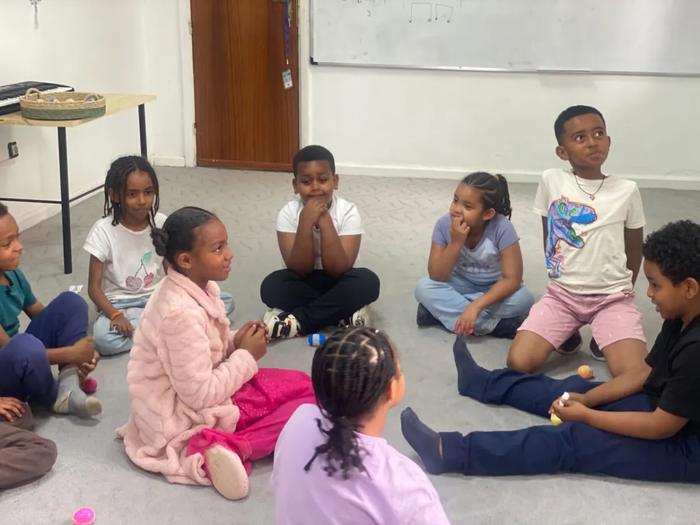
Young children do not learn by sitting still and listening. They learn by touching, moving, talking, building and pretending, and our teachers plan for that.
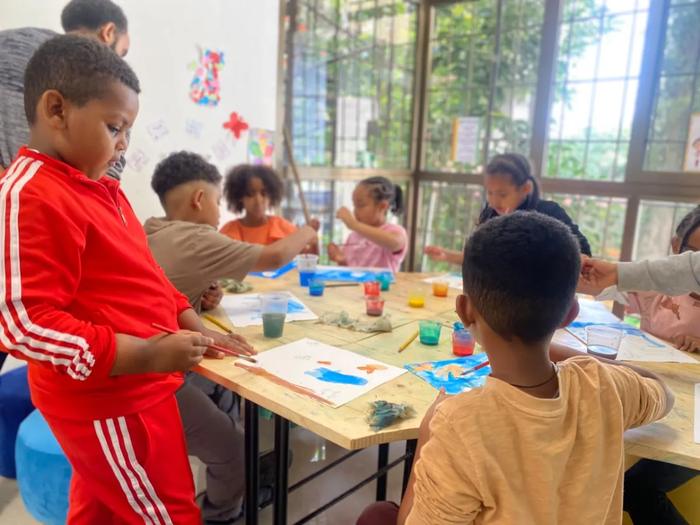
We follow the international Cambridge curriculum for the early years, known as Cambridge Early Years. It sets clear goals for language, early number, understanding the world and personal development. We reach those goals through play, stories, songs and hands-on materials.
Children leave KG able to read and count, and also curious, kind and brave enough to try.
Six areas of growth
Every activity at Nucleus helps a child grow in at least one of these areas.
Thinking
Curiosity and problem solving. Children ask why, test ideas and try again.
Body
Movement, play, dance and sports build strength, balance and coordination.
Feelings
Children learn to name feelings, calm down and care for others.
Values
Honesty, kindness and responsibility, practised every day, with respect for nature.
Tools
Blocks, sand, paint and books, with a little technology used with a teacher.
Community
Parent workshops and partnerships connect home and school.
From KG to Year 2 (Grade 1), at Nucleus
Graduates of our KG can continue at the Nucleus grade school at the Vatican campus, which is now open for Year 2 to Year 9 (Grade 1 to Grade 8).
That means the same international Cambridge curriculum pathway, the same values and a school that already knows your child. Moving up is a step, not a leap.
Curriculum questions
Which curriculum do you follow?
We follow the international Cambridge curriculum for the early years, called Cambridge Early Years. We teach it through play, stories, movement and hands-on materials.
Is it play-based, or will my child sit at a desk?
Learning is play-based. Children build early reading, number sense, science thinking and art skills by doing real things with their hands, bodies and friends. Short group times sit between longer stretches of play.
What do you mean by the six growth areas?
We look at the whole child: thinking, body, feelings, values, tools and community. Every activity serves at least one of these. You can read more on our curriculum page.
Will my child learn to read and count in KG?
Yes. KG builds deeper early literacy and numeracy, along with confidence and independence, so children are ready for Year 2 (Grade 1). We build these skills through games, stories and real tasks.
Is there a screen or technology component?
Technology is one tool among many, used in small amounts and with a teacher. Most learning uses multisensory materials such as blocks, sand, paint, books and music.
What happens after KG?
Graduates can continue at the Nucleus grade school, which is now open for Year 2 to Year 9 (Grade 1 to Grade 8). Children keep the same international Cambridge curriculum pathway and the same values.
See the curriculum in action
Visit a classroom and watch children learn by doing.