On this page
You are about to leave your child with other adults for most of the day. That is a big step, so take your time. This guide shows you how to choose a preschool in Addis Ababa, step by step.
The city has many preschools now. Some are excellent. Some look great online and feel very different on a Tuesday morning. You might be new to Addis. You might be back after years away. You might have grown up here and want something different for your own child. The same checks work for all of you.
Start with what you want for your child
Before you open a single website, write down three things. What should your child be able to do in a year? What would worry you? What matters most to your family: language, faith, curriculum, travel plans, a calm setting?
A diplomat family may move in three years, so an international curriculum counts for a lot. A family staying in Addis for good may care more about a short drive and a clear path to Year 9 (Grade 8). Both are fine. A written list keeps you from being won over by a nice front desk.
Look at the curriculum, then ask how it is taught
Most international preschools say they follow a framework. Ask which one. Then ask what it looks like at ten in the morning.
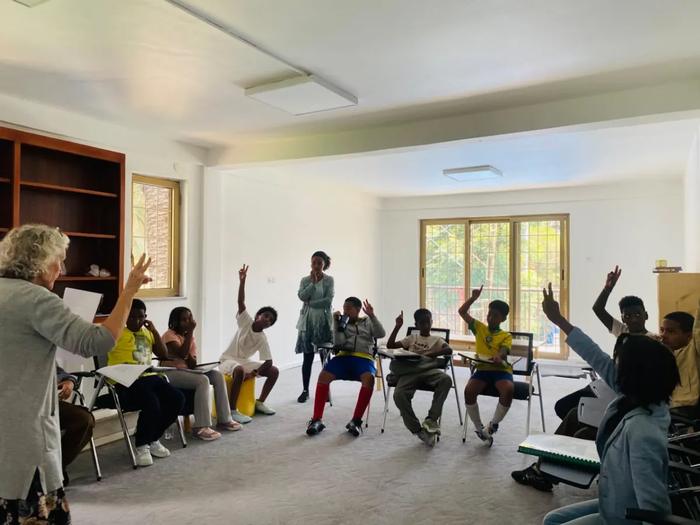
At Nucleus we follow the international Cambridge curriculum for the early years. You can read what it covers in our sister school's guide to Cambridge Early Years. It sets goals for language, early number, understanding the world and personal growth. The teaching matters just as much as the framework. Children this young learn through play, stories, movement and real objects. If a school shows you worksheets and rows of children sitting still, ask why.
Good signs in a classroom:
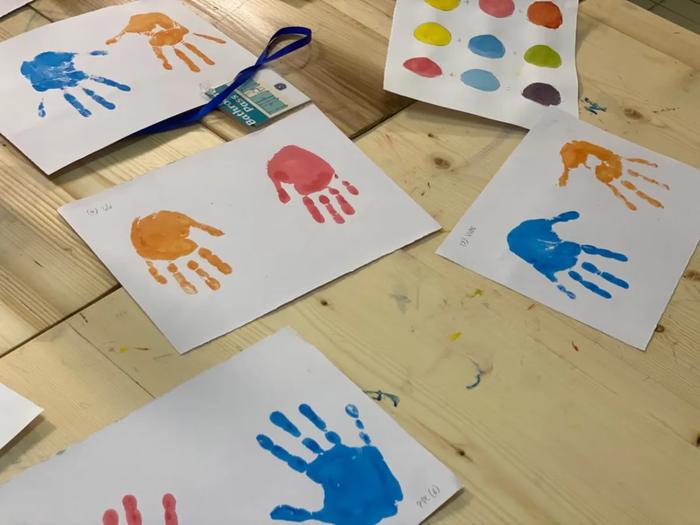
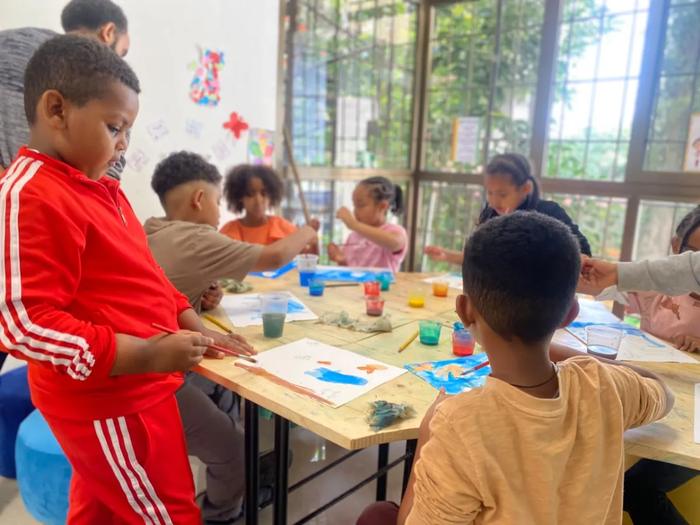
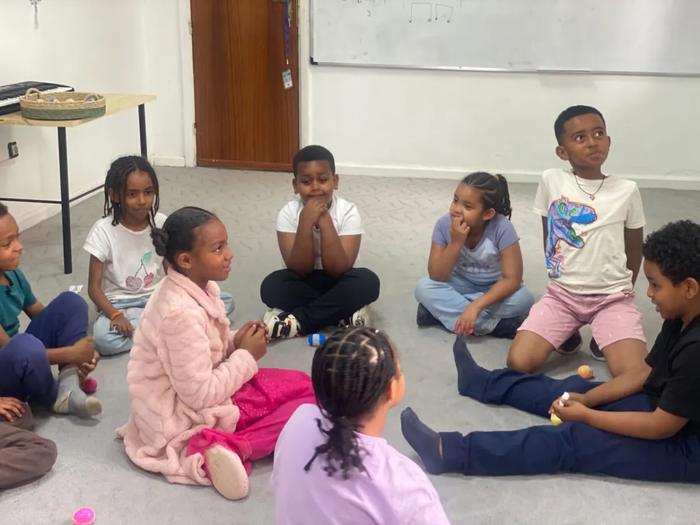
- Children are doing things with their hands: pouring, building, painting, sorting.
- Books sit at child height and look well used.
- There is a quiet corner for a child who finds the room too loud.
- Children's own work is on the walls, not only posters made by the teacher.
- The teacher kneels or sits to talk with a child.
Watch the teachers more than the building
A lovely building does not teach. A teacher does. Ask who will be in the room with your child every day, how they were trained and how long they have worked at the school.
Listen to how adults speak to children during your visit. Calm voices are a good sign. So is specific praise, like "you put the red block on top, that was careful." So is patience with tears. If children are told to hurry up and stop crying all the time, the school is telling you something.
Language matters here. Many families speak two or three languages at home. Ask which languages the staff speak and when children hear them. At Nucleus our staff are professionally trained and multilingual, so children hear more than one language in songs, stories and everyday talk.
Check class size and personal attention
Small classes matter at this age. A three-year-old who needs help with a coat, a friend and a big feeling all at once needs an adult close by. Ask how many children are in each class and how many adults. Then ask how a teacher knows what each child has learned this month.
The honest answer is observation. The teacher watches, takes notes and adjusts. If the answer is a test, keep asking.
Ask about safety in plain words
Safety is the first thing most parents check, and many schools explain it badly. Ask to see how a child arrives and how a child leaves. Who opens the gate? Who may collect a child? What happens if a stranger arrives with a message from you?
Look for controlled access, CCTV and staff with child-safety training. A good school is glad to walk you through it. If the answers are vague, that is your answer. Our preschool safety checklist covers every point, so read it before you visit anywhere.
Find out where the food comes from
Hungry children cannot learn well. They also build habits at the lunch table that last. Ask who makes the food, what a normal week looks like, and how the school handles allergies.
At Nucleus a chef prepares fresh meals and snacks at school. You tell us about allergies when you register, and we plan around them.
Think about the road to school
Addis Ababa traffic is real. A school forty minutes away can look perfect on paper and feel tiring by October. Count the trip twice: once in the morning rush and once at pick-up.
If you live in or near Bisrate Gebriel, a preschool there gives your child more time to play and sleep. It gives you your mornings back. Our new campus is there, and you can see the new campus for yourself.
Ask where your child goes next
Good preschool years lead somewhere. Ask what happens at the end of KG. Does your child have to start the search again? Will the next school build on the same curriculum?
Children who finish KG with us can move on to the Nucleus grade school, which teaches Year 2 to Year 9 (Grade 1 to Grade 8). That gives you one set of values and one curriculum path, from your child's first morning to the end of Year 9 (Grade 8).
Questions to take on every visit
- Which curriculum do you follow, and how does it show up in a normal day?
- Who will be my child's main teacher, and how were they trained?
- How many children are in the class, and how many adults?
- How do arrival and collection work? Who can pick up my child?
- Who makes the food? How do you handle allergies?
- How will I hear how my child is doing?
- How do you help a child who cries at drop-off?
- How do you welcome children who learn differently?
- What happens after KG?
Write the answers down. By the third school you will not remember who said what.
Trust the visit
A brochure shows what a school wants you to see. A visit shows the rest. Go on a normal school day if you can. Watch the corridor when classes change. Do the children look at ease? Would you feel fine asking any teacher a silly question?
Bring your child if you can. Twenty minutes in a new room tells you more than any prospectus. You do not need a child who joins in right away. You need adults who are kind when a child hangs back.
A note on fees and places
Fees differ a lot, and most schools prefer to talk about them directly. Ask what the fee covers: meals, materials, activities, uniform. Ask about places too. At Nucleus, admissions are open all year, but places are limited. Families who ask early get more choice. For fees, call +2519 47 50 09 92 and we will explain everything.
What we hope you find
A good preschool should feel like a place your child runs into, and you feel calm leaving. It should teach real skills through play. It should explain itself without jargon. It should know your child by name.
If you think Nucleus International Preschool might fit your family, book a visit at our new campus in Bisrate Gebriel and bring your list. When you are ready, you can register your child on our admissions page.
Related reading: Admissions at Nucleus · Visit our new campus
Common questions
When should I start looking for a preschool in Addis Ababa?
Start a few months before you want your child to begin. Good schools have limited places, and you will want time to visit two or three. Nucleus admissions are open all year, so you can ask about places at any time.
What is the most important thing to check on a visit?
Watch how teachers talk to children and how the children answer. Calm, kind adults who give specific praise matter more than any building. Then check how arrival and collection work.
Should I choose a school close to home or the one with the best name?
Think about both, but do not ignore the drive. A long daily trip tires young children and parents. If a school near you is strong on teaching, safety and food, it often wins.
Does an international curriculum matter at this age?
It matters if you might move, or want a clear path through the later school years. At Nucleus we follow the international Cambridge curriculum for the early years, taught through play, so children build real skills in a way that suits their age.