On this page
Your child is two, or nearly three, and a friend has just asked which preschool you have picked. You have not picked one. You are not even sure it is time.
Here's the short answer. Most children do well in a play-based preschool from about age 3. Some settle happily at 2. A few are better off waiting a little. The birthday matters less than the child, and less than the school.
Why there is no single right age
Every child grows at their own speed. One three-year-old will wave goodbye at the gate and run to the blocks. Another will cling to your leg for a week and then love every minute. Both are normal.
The international Cambridge curriculum describes its early years stage as a play-based programme for children aged 3 to 6. That is the stage we follow in our Preschool and KG. It treats the years from 3 to 6 as one long start, not a race to the first exam.
Ethiopia's government pre-primary year, the O-class, is for six-year-olds. International schools begin earlier. So the same child can be in a pre-primary class under one system and in preschool under another. If you may move schools later, ask each school which date it uses to count a child's age.
What happens at home counts most before 3
The World Health Organization says the years from pregnancy to age 3 are the most important for brain growth. It also says healthy growth in those years needs a safe, loving home and good food. It needs adults who talk and play with the child.
That is good news. It means you are already doing the main work. A good preschool adds to it. It doesn't replace it. If your child is two and happy at home, you haven't missed anything.
Signs your child may be ready
Readiness is a handful of small skills, not one big one. Teachers usually look for these:
- Your child can stay with a teacher for a morning. A few tears at the gate are fine if they settle within minutes.
- They notice other children and play near them or with them.
- They can follow a short two-step request, like "put your bag away and sit down".
- They can tell an adult what they need, with words or gestures.
- They enjoy a story or a tower of blocks for a few minutes at a time.
None of these is a test. A child who can't do one of them at 3 is ordinary. Schools also treat toilet training differently, so ask what ours expects before you worry. You can ask us on a visit or by phone.
What each age looks like in a good preschool
Age 2 to 3: routine and warm adults
At this age a preschool should feel like a loving home with more children in it. Look for short sessions and the same order each day. Songs and stories help. So do adults who kneel to talk. How many children each adult looks after matters more than any curriculum label. Ask each school how many children one adult looks after.
Age 3 to 4: language, friends and first number
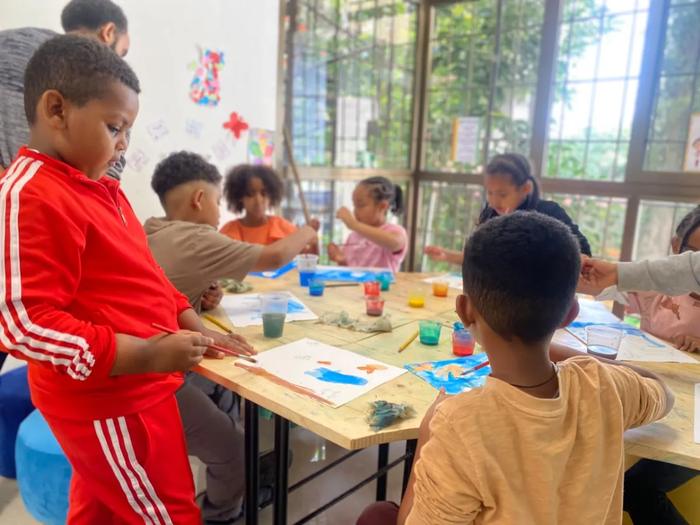
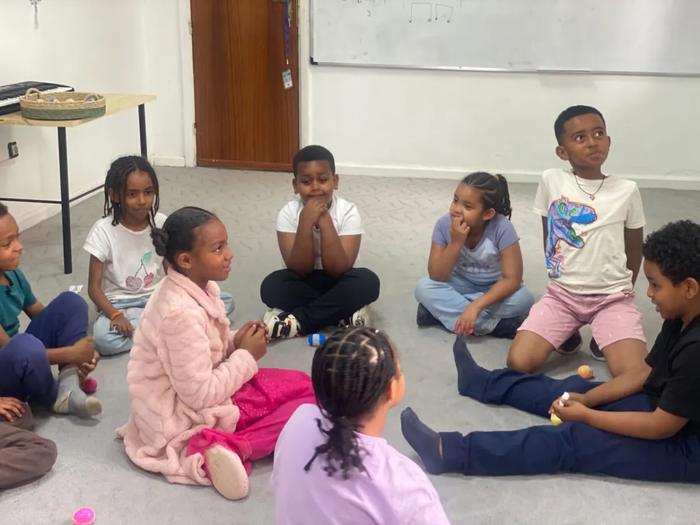
Now the play gets bigger. Children share and take turns, then argue about whose turn it was. They pick up letters and sounds through games. They count real things, like blocks and spoons. Most of the learning is invisible to a visitor, because it looks like fun.
Age 4 to 5: getting ready for Year 2 (Grade 1)
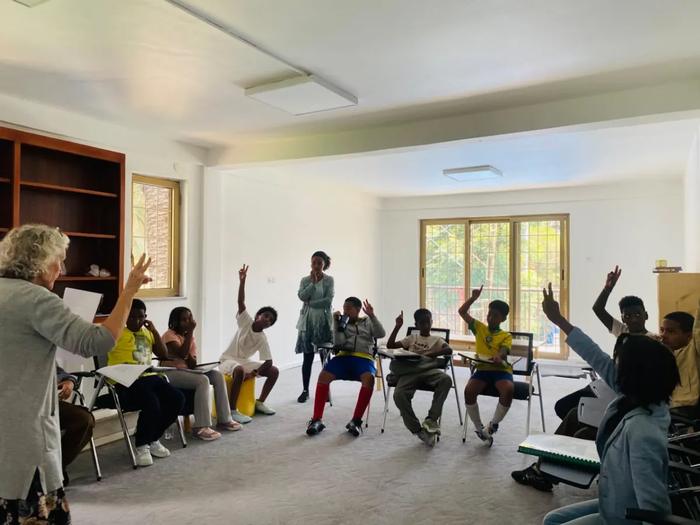
In KG, children build more independence. They look after their own things and listen in a group. Early reading and writing begin. The aim is a child who puts a hand up and asks, not one who has memorised a worksheet.
Is starting later a problem?
No. Finland starts formal school at seven and its children do well. What matters is what the years before that line contain. A calm year at 4, full of talk and play, can do more than a rushed year with worksheets.
If your child is not ready at 3, wait a term. Visit again. Ask the teachers what they see. A good school will tell you the truth, even if the truth is "come back in January".
If your family may move countries
Diplomat and NGO families often ask something else: which stage will my child be in when we move? The international Cambridge curriculum names its stages the same way across many countries, so a child can usually pick up the next stage in another school on the same curriculum.
If a posting ends in two years, a start date that lets your child finish a stage before you leave can be worth more than an early start. Our main school has written a longer guide: read our full guide on the best age to start school for the Year 2 (Grade 1) years that come after preschool.
Questions to ask before you choose
- How many adults are in my child's room, and how many children?
- What will my child do between 9 and 10 in the morning, and what is it meant to teach?
- How do you help a child who cries at drop-off?
- What happens after KG? Is the move to Year 2 (Grade 1) planned?
Our preschool guide for choosing a school in Addis Ababa has a longer list of things to look for.
Where we are, and what to do next
Our Preschool and KG are at the South African Campus in Bisrate Gebriel, next to Adot Building, Addis Ababa. The best test is to see it. Come on a normal morning and watch a class for ten minutes. Bring your child if you like.
When you are ready, register now and we will tell you which program fits. Or call +2519 47 50 09 92 and ask us anything first. Fees are shared by phone.
Related reading: How to choose a preschool in Addis Ababa · Our programs · Book a visit
Common questions
What is the best age to start preschool?
There is no single best age. Most children do well in a play-based preschool from about 3, and some are ready at 2. Look at how your child separates, plays and follows simple requests rather than at the birthday alone.
Is 3 too early to start preschool?
No. The international Cambridge curriculum designs its early years stage for ages 3 to 6. At 3, the day should be short enough, the adults warm, and the learning built around play, not worksheets.
Can my child start preschool at 2?
Some children settle well at 2. Call us on +2519 47 50 09 92 to ask about the right start age for your child. At this age the school should feel like a loving home, with short sessions, steady routines and adults close by. Most of a two-year-old's learning still comes from home.
Is it better to start preschool later?
Not always. Some countries start formal school at seven. The quality of the years before school matters more than the exact age. If your child is not ready at 3, waiting a term is fine.
What age do children start preschool in Ethiopia?
The government O-class is for six-year-olds. International preschools in Addis Ababa, including ours, usually start earlier, from about 3, and some from 2. Each school sets its own cut-off date, so ask which date it uses.