On this page
Ask three schools in Addis Ababa what KG1 means and you may get three answers. One starts at 3. Another calls the same year "Nursery". A third skips the label altogether.
Here is a plain guide to the names and the ages. It also shows what a good KG year should hold. Use it to compare schools on what happens in the room, not on what the sign says.
What KG means
KG stands for kindergarten. It is the last stage of early education before formal primary school. In Ethiopia you will hear KG1, KG2 and sometimes KG3. Many private and international kindergartens take children from about age 3, with two or three KG years before Year 2 (Grade 1).
The label is only a label. Always ask the age, not the name. A child in "KG1" at one school may be a year older or younger than a child in "KG1" at another.
The stages, side by side
- Preschool: a first school experience built on play. Letters, sounds and first numbers come through games.
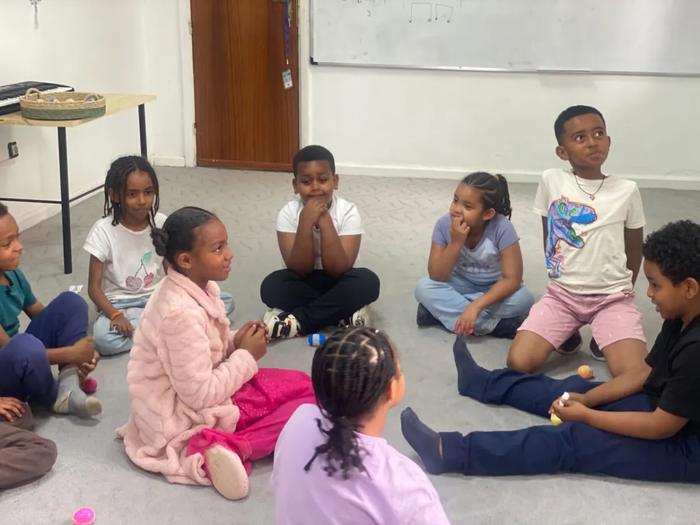
- KG1: usually children aged 3 to 4. More language, more friends, more independence.
- KG2: usually children aged 4 to 5. The year of early reading, writing and number work.
- Year 2 (Grade 1): children aged 5 to 6, in the Cambridge Primary stage.
Our Preschool and KG programs follow the international Cambridge curriculum for the early years, known as Cambridge Early Years. KG adds more structure before Year 2 (Grade 1). We talk through which stage suits your child at a family meeting, so you do not have to guess.
What a good KG year should give your child
A child who can listen, share and ask
By the end of KG, we want a child who can listen in a group and take turns. We want one who looks after their own things and asks for help. These sound small. They make Year 2 (Grade 1) feel easy.
The first real steps in reading and number
KG is where letters become words and counting becomes number work. A good programme teaches sounds first, then blending them into words. Chanting the alphabet song is fine, but it is not the same thing.
Play with a plan
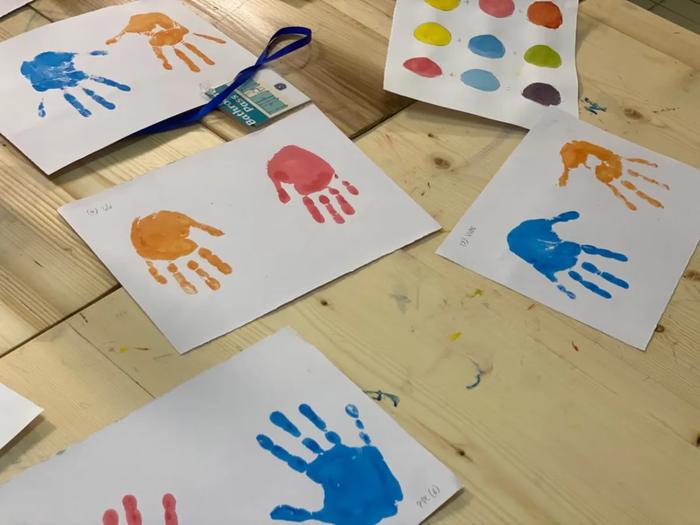
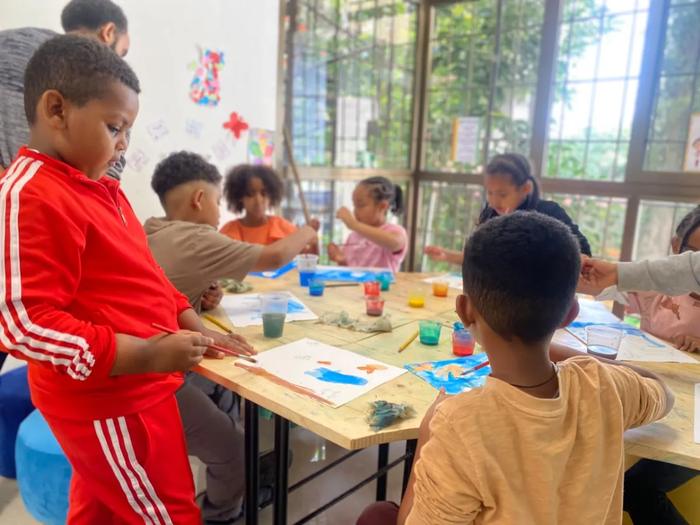
Play-based does not mean free time. Ask what a block session or a sand tray is meant to teach. A good teacher will tell you it teaches counting and comparing. It teaches turn-taking and new words too. Rows of copying exercises for four-year-olds are a warning sign. They mostly teach sitting still.
Six checks that separate a good KG from a pretty building
1. Adults for children, in the actual room
Ask for the number in your child's class, not the school average. Fewer children per adult means more chances for real conversation. Count the adults when you visit.
2. Training in early years
Teaching four-year-olds is a specialism. Ask what early years training the class teacher has and what training staff did this year.
3. Language plan
Children can learn two or three languages at this age. Ask which language is used for teaching. Ask whether Amharic is taught. Then ask how a child who speaks neither is helped in the first weeks.
4. Outdoor time and screens
The World Health Organization recommends at least 180 minutes of physical activity a day for children aged 3 and 4, and no more than one hour of screen time for ages 2 to 4. A tablet room is not an advantage. A small courtyard used well beats a big field nobody visits.
5. Safety and food
Ask who can collect your child and how staff check. Ask who cooks, and how allergies are handled. At our campus only approved adults enter and collect, and our chef prepares meals at school.
6. What happens after KG
It's the question parents forget most often. A child who changes curriculum at Year 2 (Grade 1) starts again with new teachers and new methods. If KG leads straight into a primary school on the same curriculum, the move is a step, not a jump.
Ours does. Children who finish KG can continue at the Nucleus grade school at the Vatican campus, which teaches Year 2 to Year 9 (Grade 1 to Grade 8). Our main school has a longer, twelve-point list: read our full checklist for choosing the best kindergarten in Addis Ababa.
Questions parents often forget to ask
Ask how the school will tell you about your child's day. A daily note, a weekly message or a talk each term are all reasonable. Ask who you call if something worries you, and how fast someone answers. Silence until the end of term is not good enough for a four-year-old.
Ask about rest and snacks too. Young children tire quickly. A calm space and a steady routine make the next activity easier.
How to spend your visit
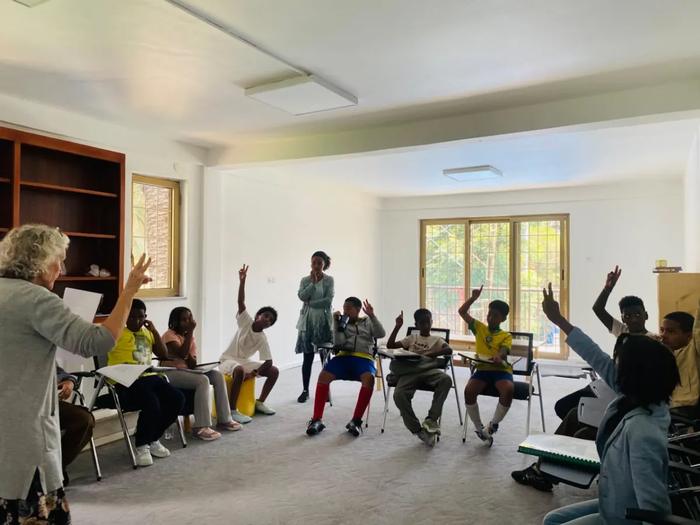
Go on a normal morning, not an open day. Then watch one classroom for ten minutes. Notice these things:
- Children's own work on the walls, at their eye level.
- A busy hum of talk, neither silence nor shouting.
- Teachers kneeling to talk with children.
- How fast a crying child gets comfort.
- Clean toilets, safe gates and staff who notice a stranger.
You can do exactly this at our school. Book a visit and we will show you where your child would spend the day. Read about our campus in Bisrate Gebriel first if you like.
Next step
Our Preschool and KG are at the South African Campus in Bisrate Gebriel, next to Adot Building, Addis Ababa. Admissions are open year-round, and places are limited. Register now or call +2519 47 50 09 92 and we will explain what is included in the fees.
Related reading: Our programs · How to choose a preschool in Addis Ababa · Our new campus
Common questions
What does KG1 mean?
KG1 is the first kindergarten year, usually for children aged 3 to 4. Schools use the label differently, so always ask the age of the children, not just the name of the class.
What is the difference between KG1 and KG2?
KG1 builds language, friendships and independence. KG2, usually for ages 4 to 5, adds early reading, writing and number work, and prepares children for Year 2 (Grade 1).
What age do children start kindergarten in Addis Ababa?
Most private and international kindergartens take children from about age 3, with two or three KG years before Year 2 (Grade 1). Each school sets its own cut-off date, so ask which date it uses.
Is play-based or academic kindergarten better?
Planned play is better for young children. They learn early maths, language and self-control through well-designed play. The best KG pairs play with clear goals instead of worksheets.
What comes after KG at Nucleus?
Year 2 (Grade 1) at the Nucleus grade school on the Vatican campus, on the same international Cambridge curriculum pathway. Because the school already knows your child, the move is a planned step.